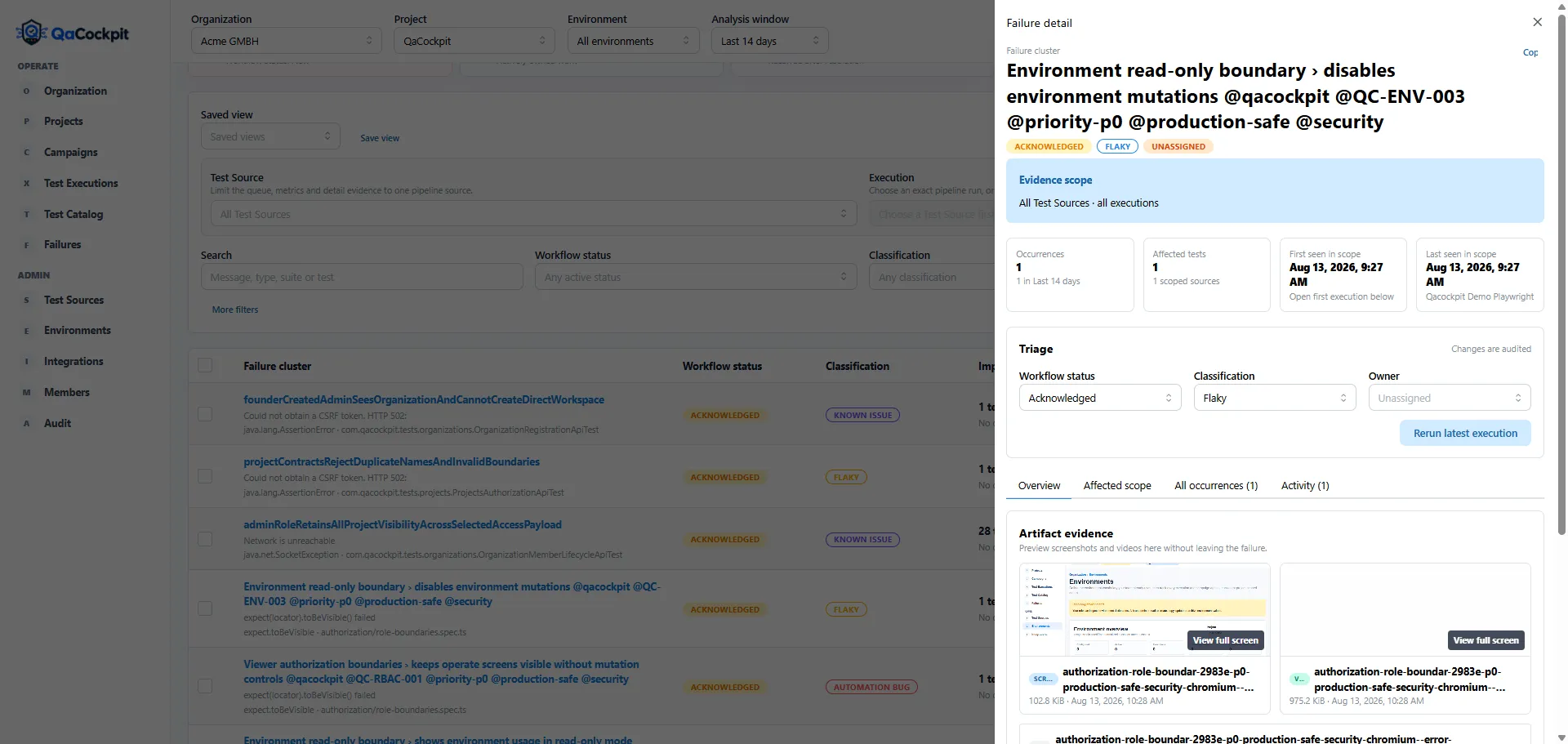
Link Azure DevOps pull requests to work items without closing work too early
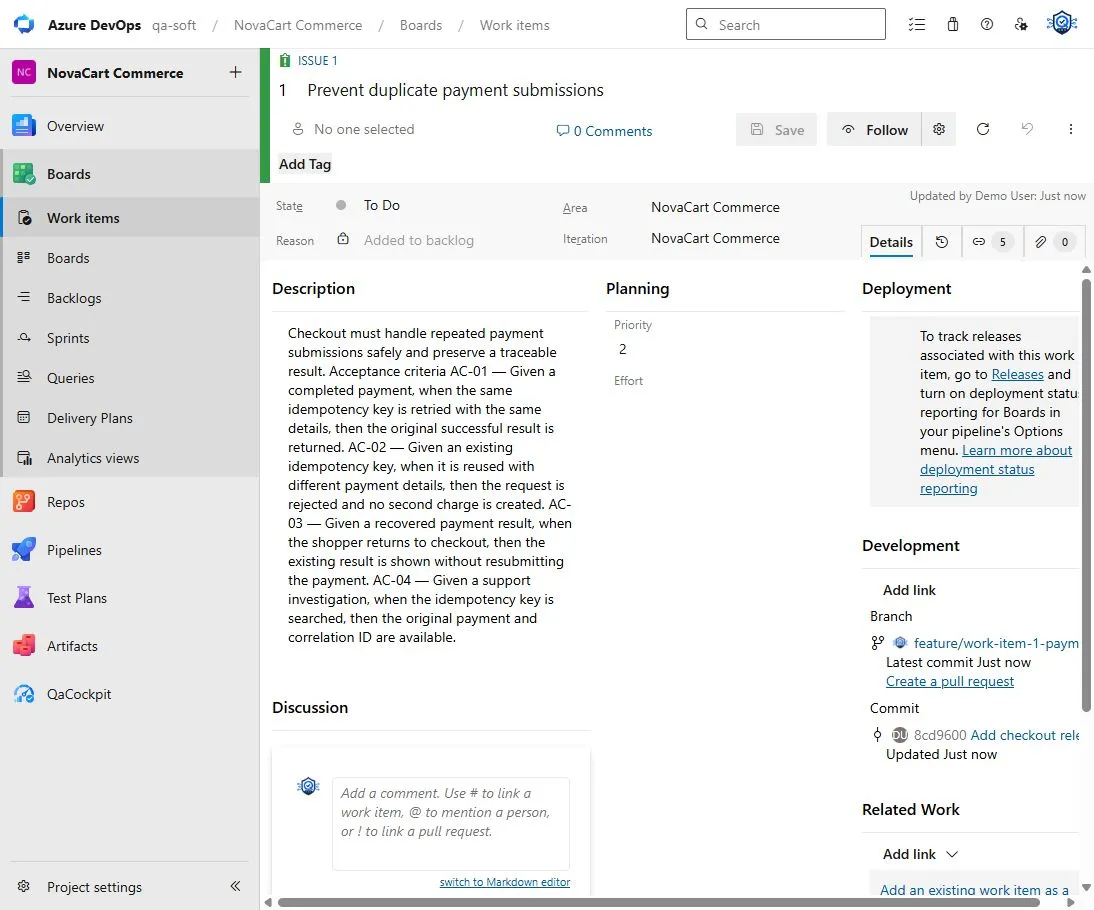
Require Azure Repos pull requests to link work items while keeping code merged, tested, deployed, and accepted as separate lifecycle states.
Read article
QaCockpit field notes
Practical thinking about TestOps, automation health, failure diagnosis, release evidence, and using better quality understanding to improve the business.
Latest thinking
39 articles
No articles match these filters. Try a broader search or clear the filters.
Require Azure Repos pull requests to link work items while keeping code merged, tested, deployed, and accepted as separate lifecycle states.
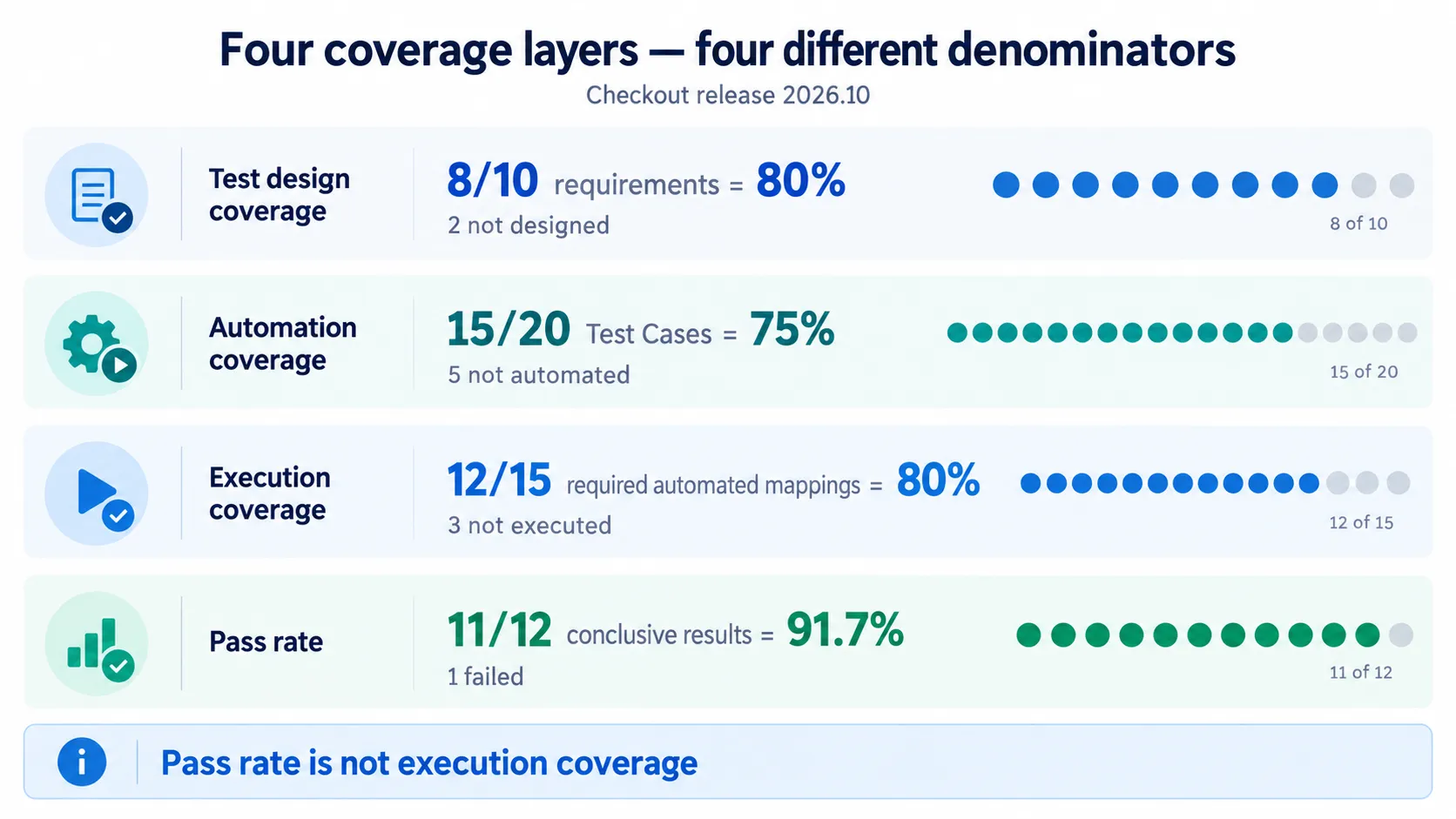
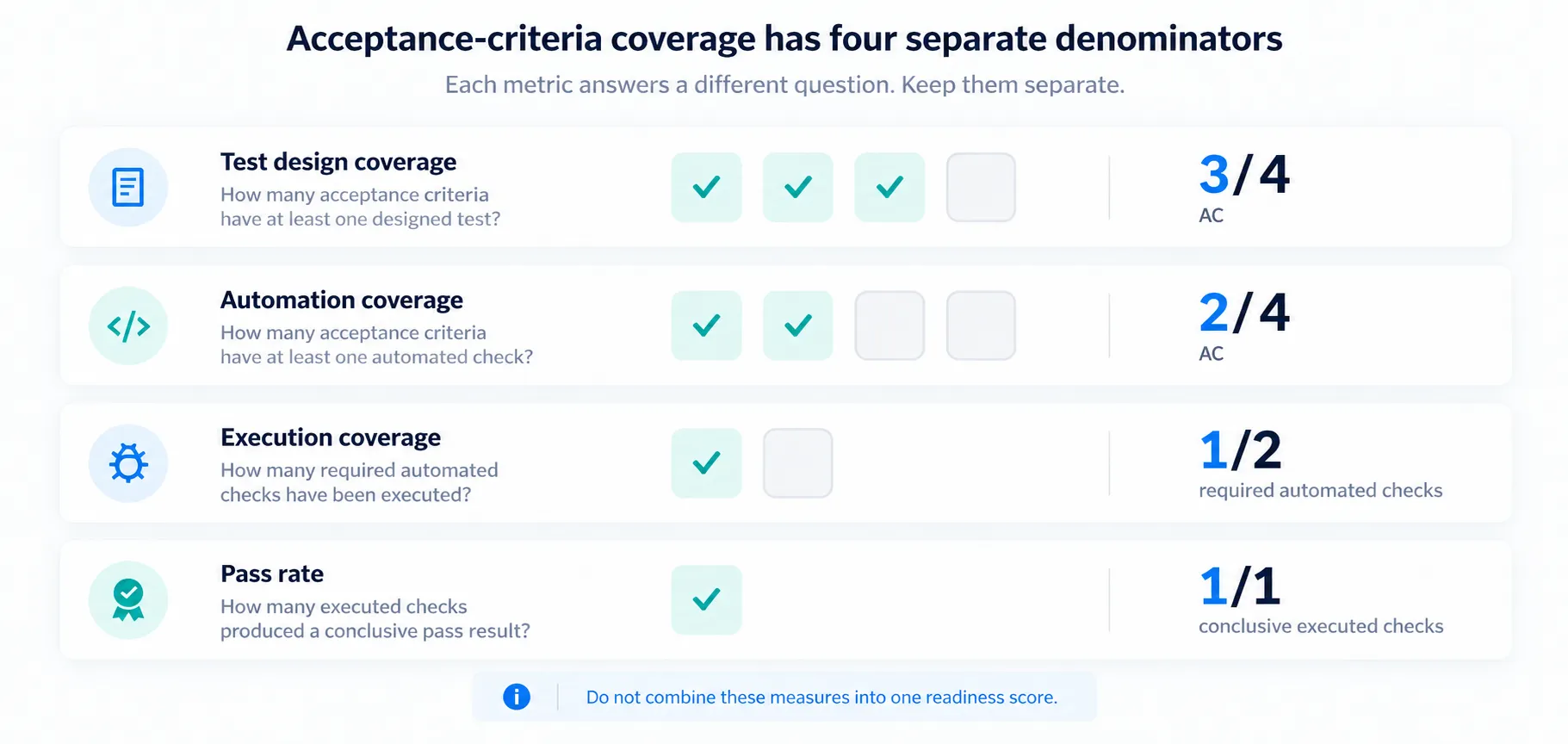
Read articleSeparate test design, automation, execution coverage, and pass rate in Azure DevOps so every percentage keeps a visible denominator and scope.
Read articleAssociate pipeline test results with Azure DevOps Test Cases while preserving logical identity, framework constraints, and exact execution context.
Read articleUse requirement-based suites in Azure Test Plans without confusing planned test coverage, automation association, execution, and release evidence.
Read articleWrite stable, testable acceptance criteria in Azure DevOps and preserve their identity from requirement review through tests and execution evidence.
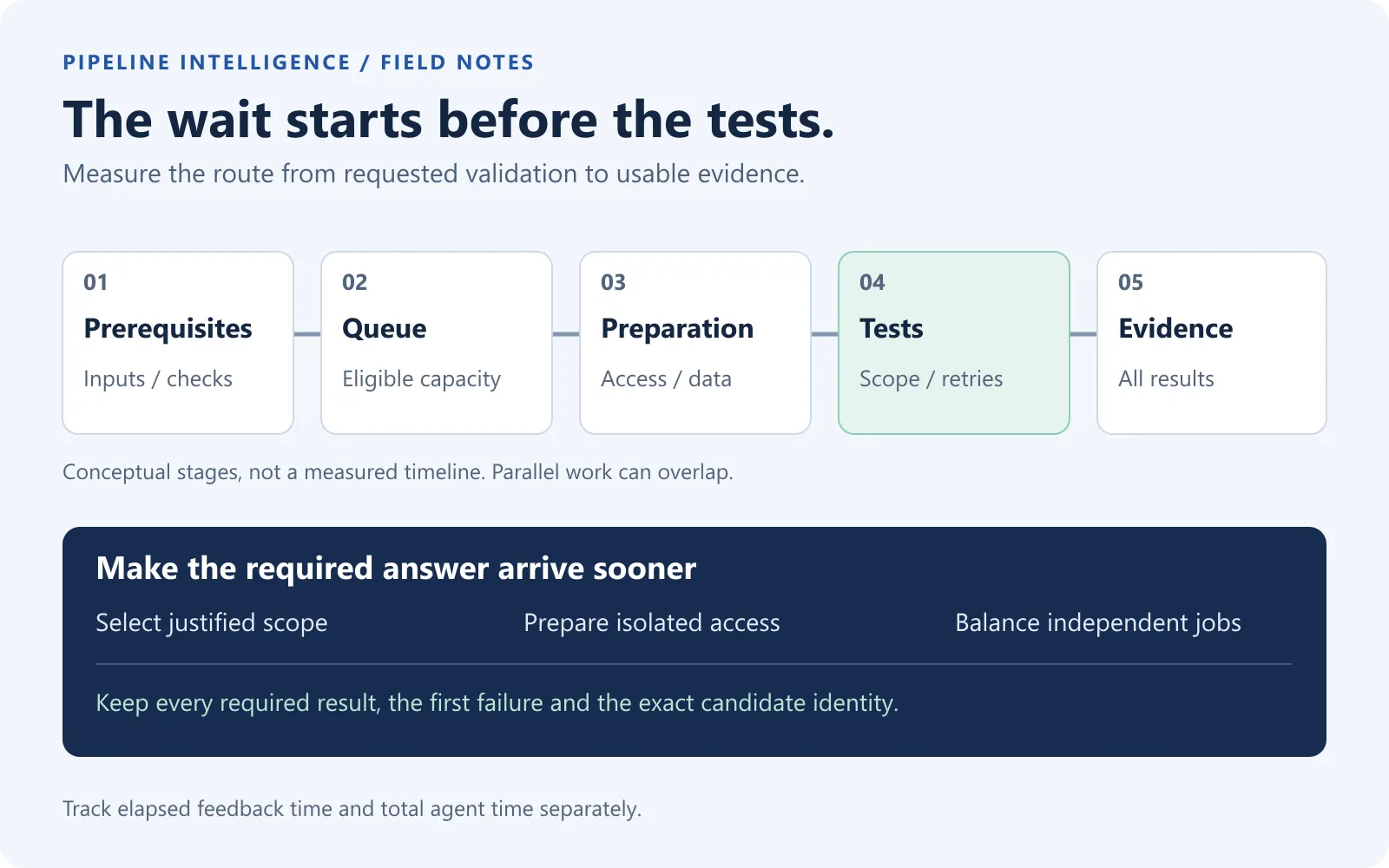
Read articleGet reliable Azure DevOps test feedback sooner by reviewing access setup, preconditions, test scope, flaky-test handling, and the limits of parallel execution.
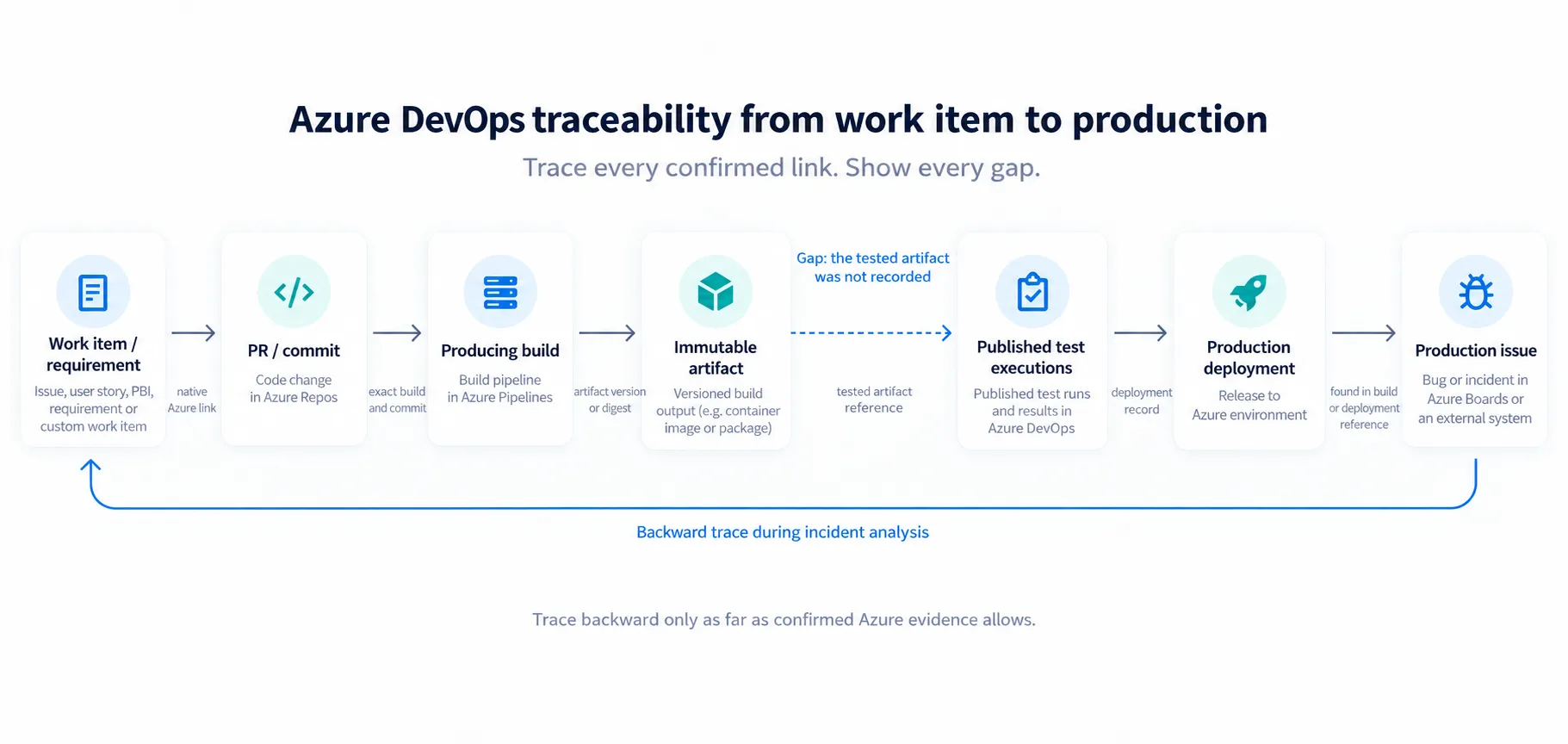
Read articleBuild practical Azure DevOps traceability across work items, code, test pipelines, artifacts, deployments, and production feedback without imposing one process.
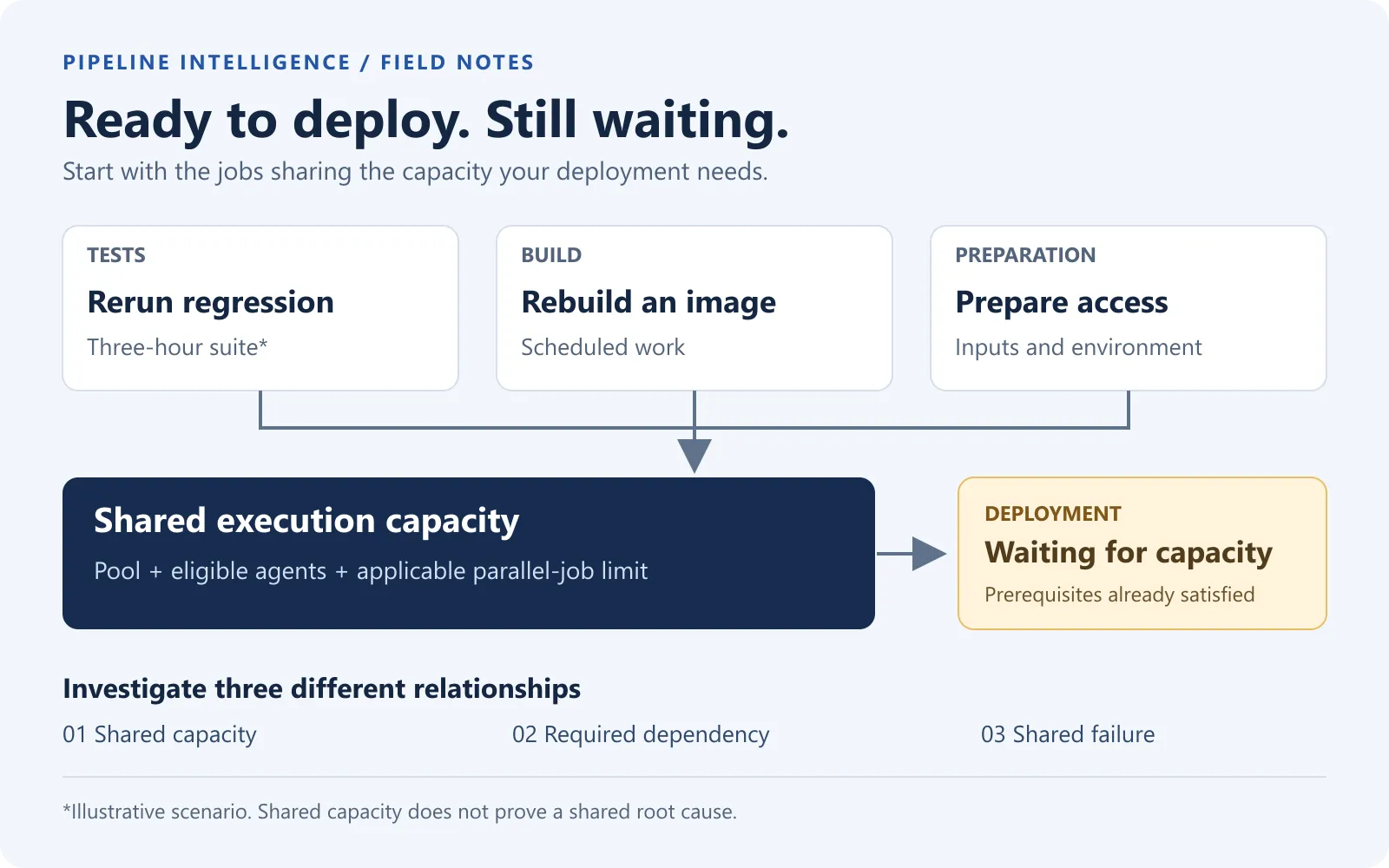
Read articleTrace Azure DevOps deployment delays across shared agents, test reruns, schedules, image builds, and dependencies before optimizing the wrong pipeline.
Read articleSeparate native Azure DevOps requirement traceability from acceptance-criteria coverage across test design, automation, execution, and results.
Read articleUnderstand Azure DevOps pipeline state, published test results, retained JUnit files, diagnostic artifacts, and missing evidence without mixing their roles.
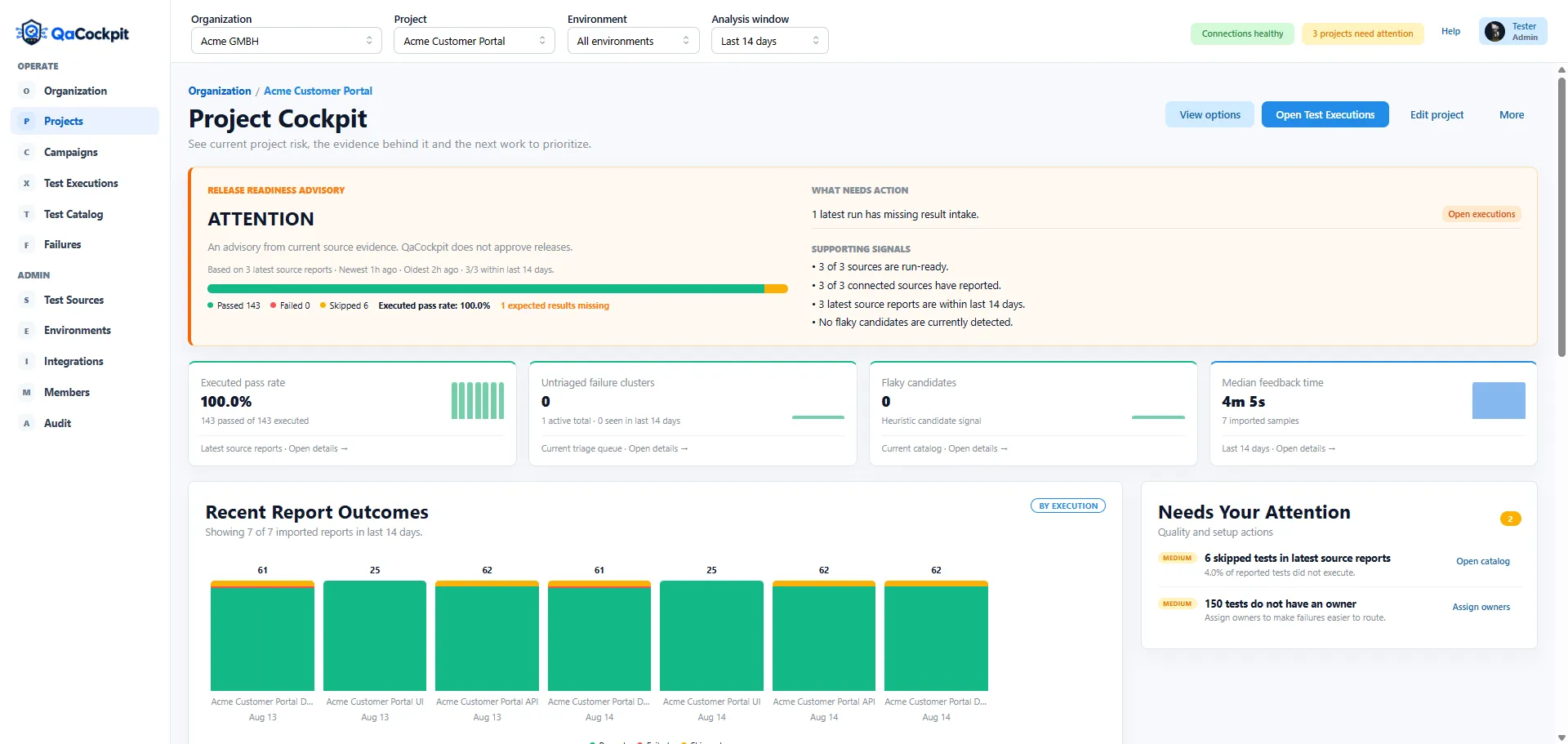
Read articleDesign an Azure DevOps quality dashboard around project health, Test Sources, evidence freshness, failures, release scope, and actionable drill-down.
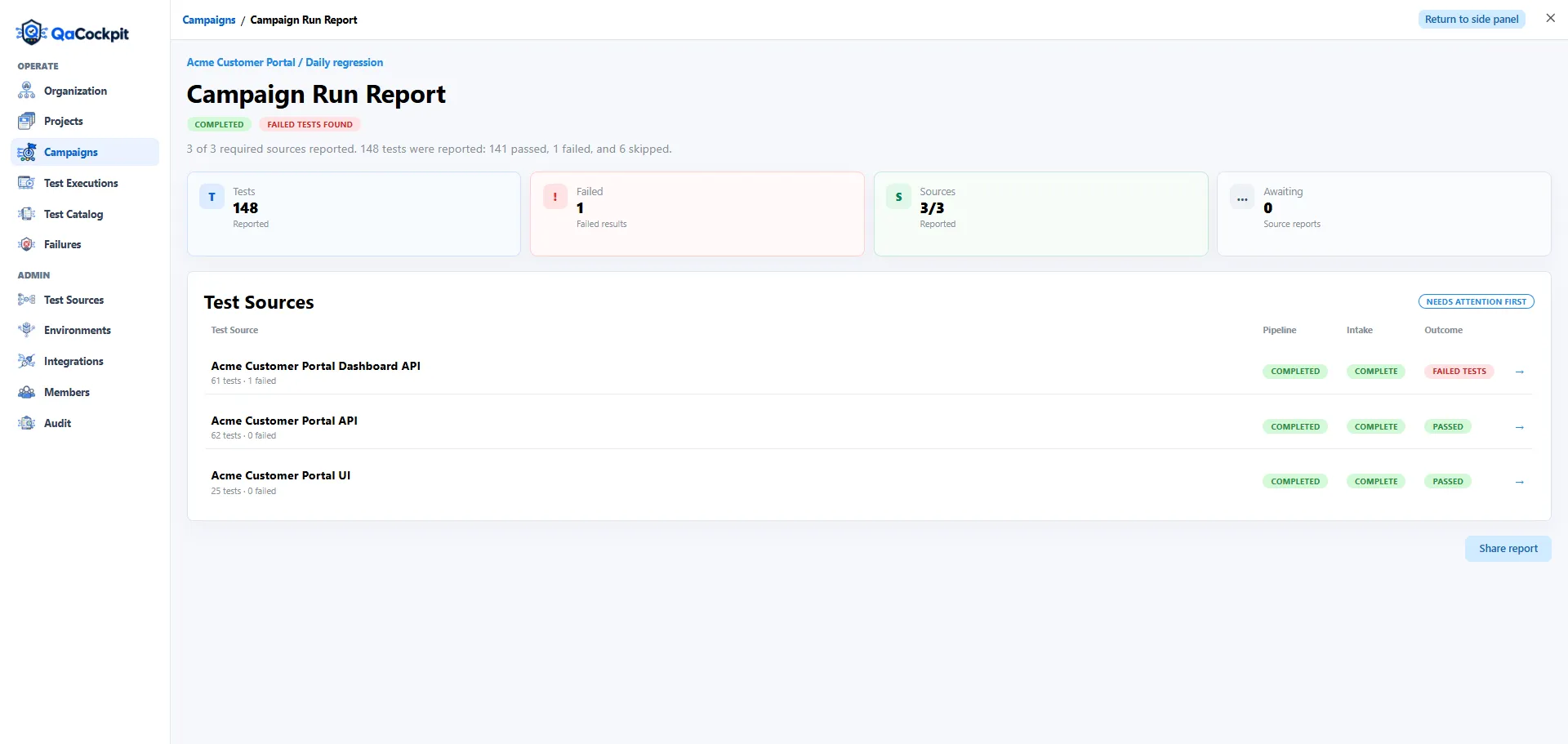
Read articleOrganize one Azure DevOps regression across UI, API, integration, and smoke-test pipelines while preserving scope, attempts, and missing evidence.
Read articleReview release readiness in Azure DevOps by tracing exact test runs to the intended application versions, environment, and retained evidence, with a worked example.
Read articleTroubleshoot a successful Azure DevOps pipeline with no usable test results by separating execution, publication, intake, and expected scope.
Read articleInstall QaCockpit for Azure DevOps from the Visual Studio Marketplace and start a 60-day organization evaluation without a card or automatic renewal.
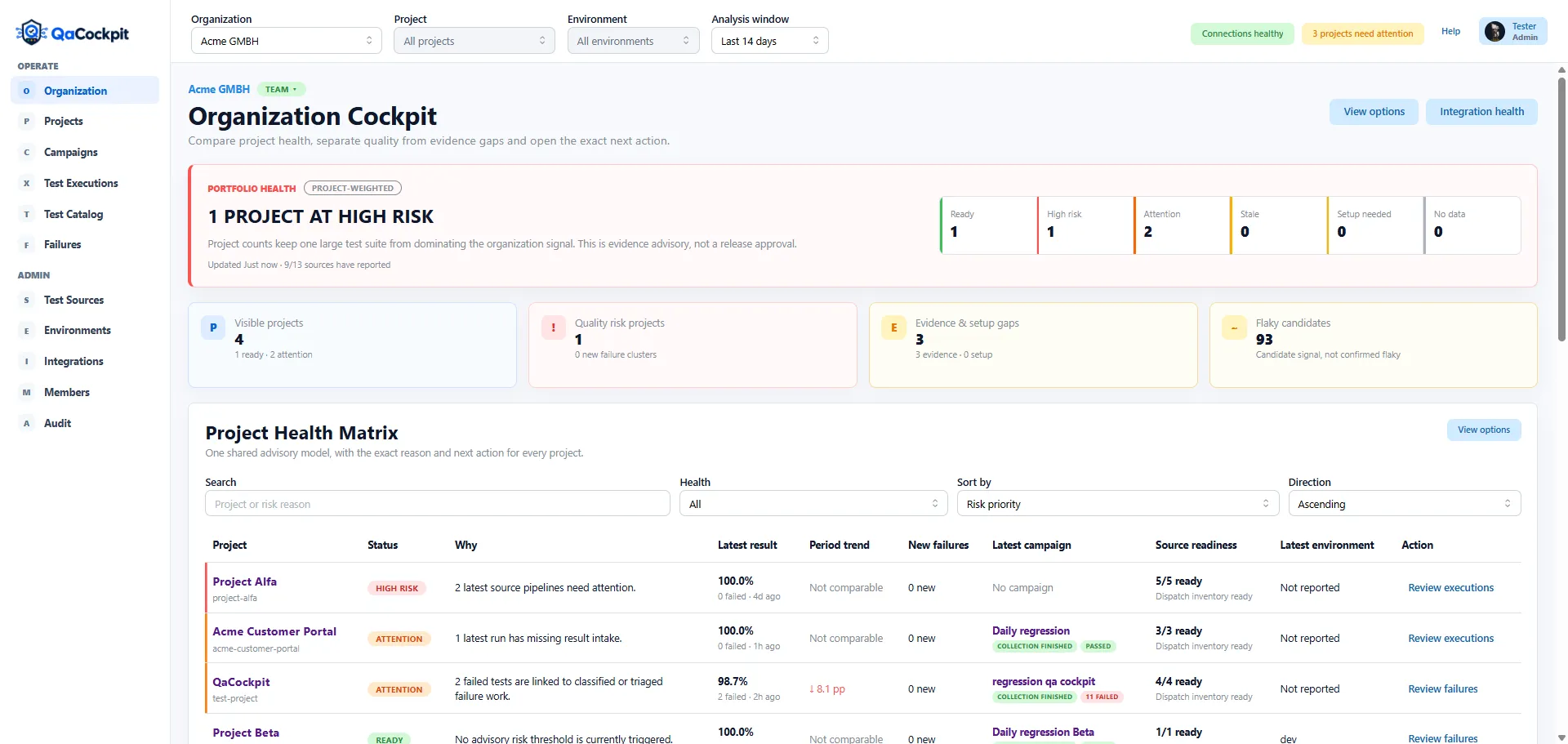
Read articleCreate an organization-level Azure DevOps quality view that preserves project health, source freshness, missing evidence, and actionable drill-down.
Read articleBuild one defensible Azure DevOps quality view across multiple pipelines without losing missing results, required scope, or exact execution traceability.
Read articleCopy a practical release readiness report template, work through a filled example, and record exact test evidence, missing results, risks, owners, and a go/no-go decision.
Read articleLearn how automated test reporting can connect exact CI/CD runs, results, scope, failures, logs, and artifacts across teams without manual status collection.
Read articleConfigure Playwright JUnit reporting, retain diagnostic artifacts on failed CI runs, and turn exact browser-test evidence into cross-team release context.
Read articleUse a practical release readiness checklist to collect cross-team pipeline, test, scope, and failure evidence before making a software go/no-go decision.
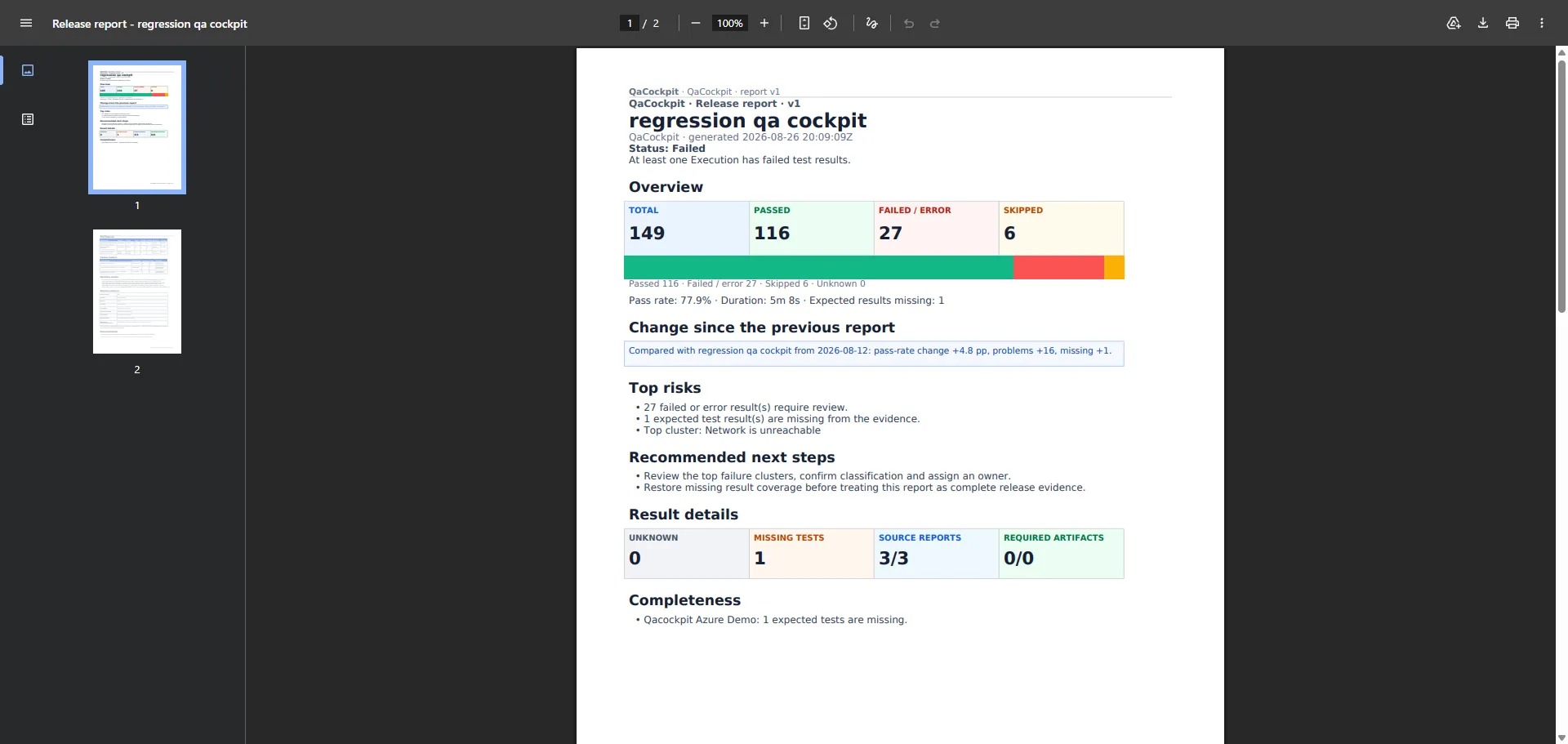
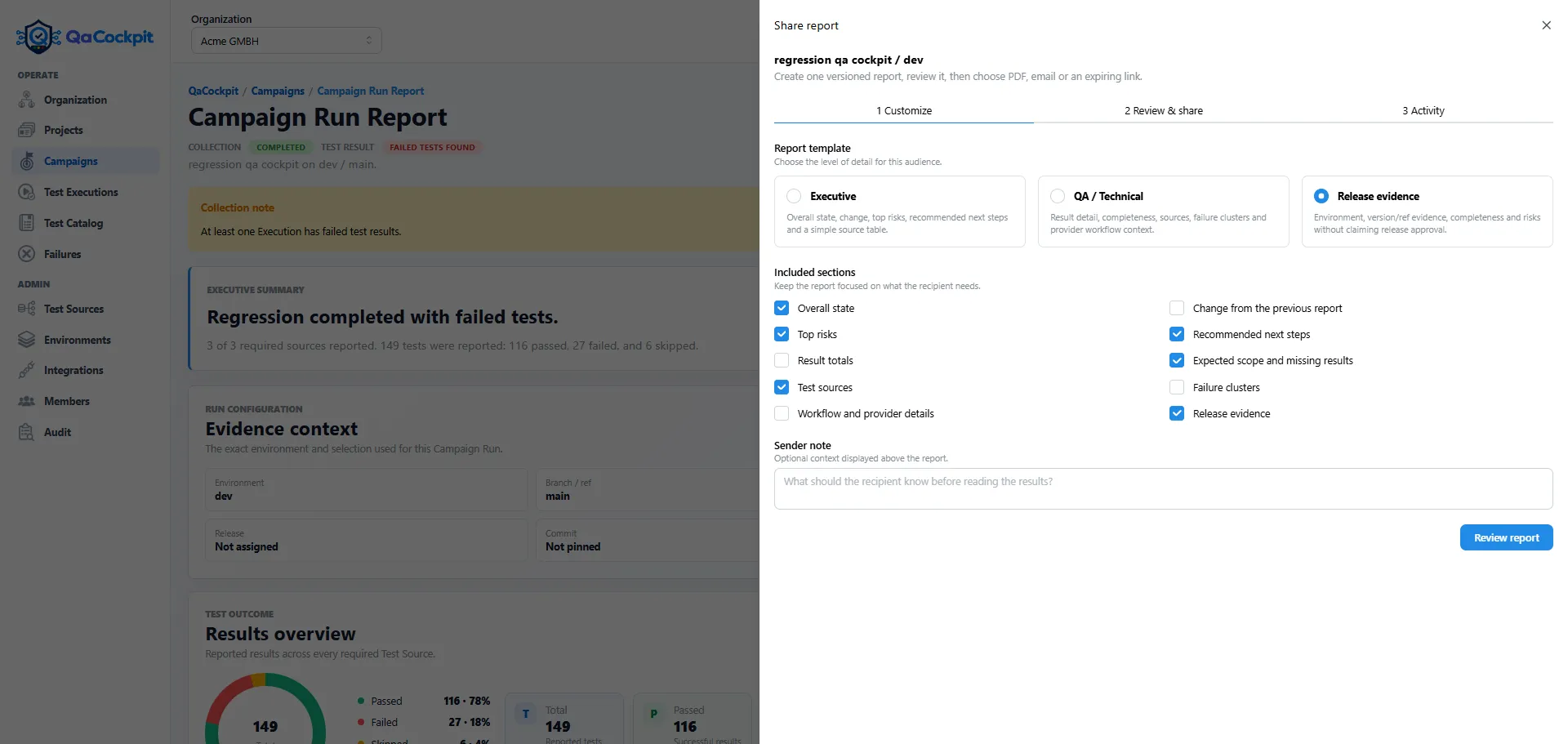
Read articleCreate audience-specific, versioned test reports from exact execution evidence, then deliver the same reviewed snapshot as PDF, email, or an expiring link.
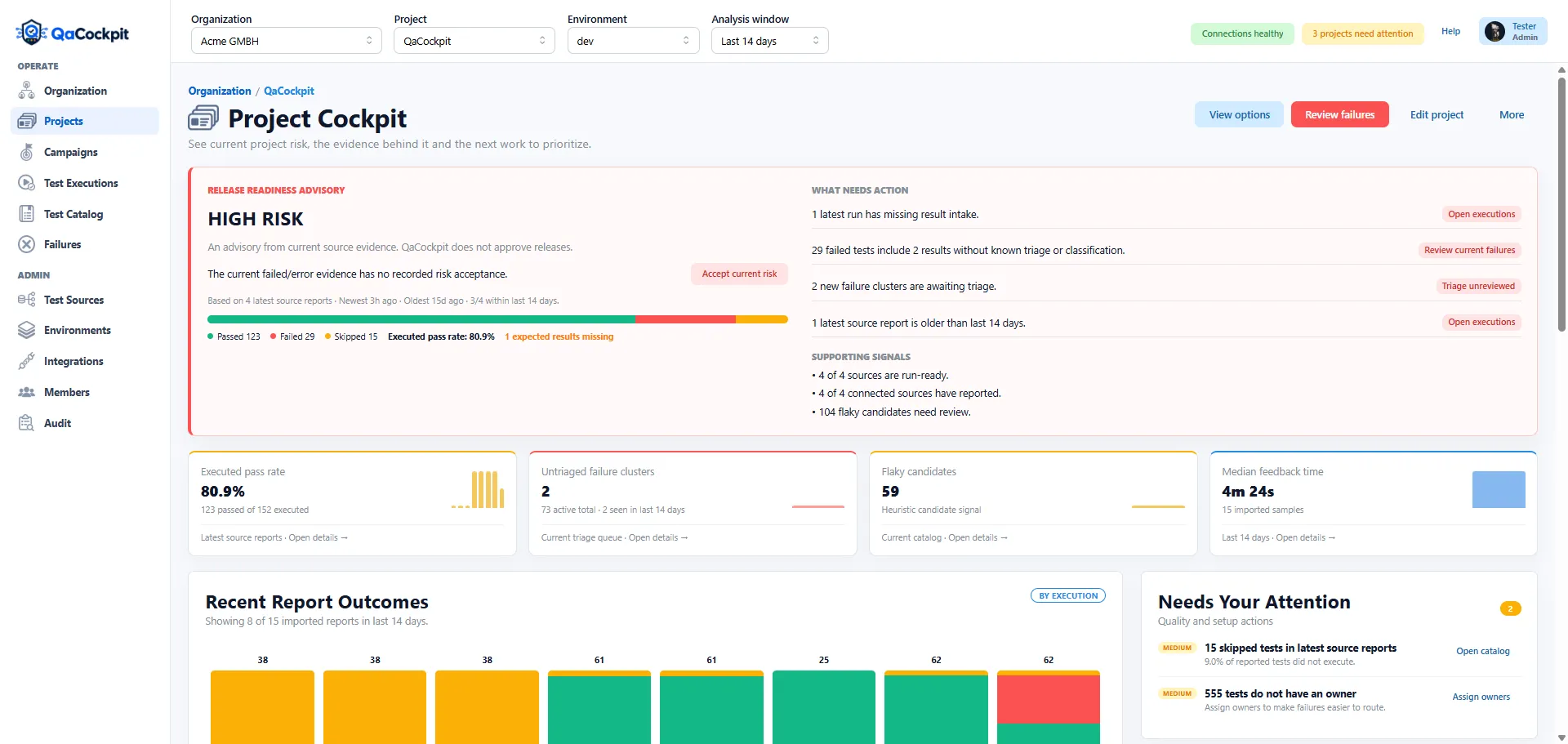
Read articleA trustworthy release readiness view exposes pipeline status, result intake, test outcomes, freshness, and the exact evidence behind every warning.
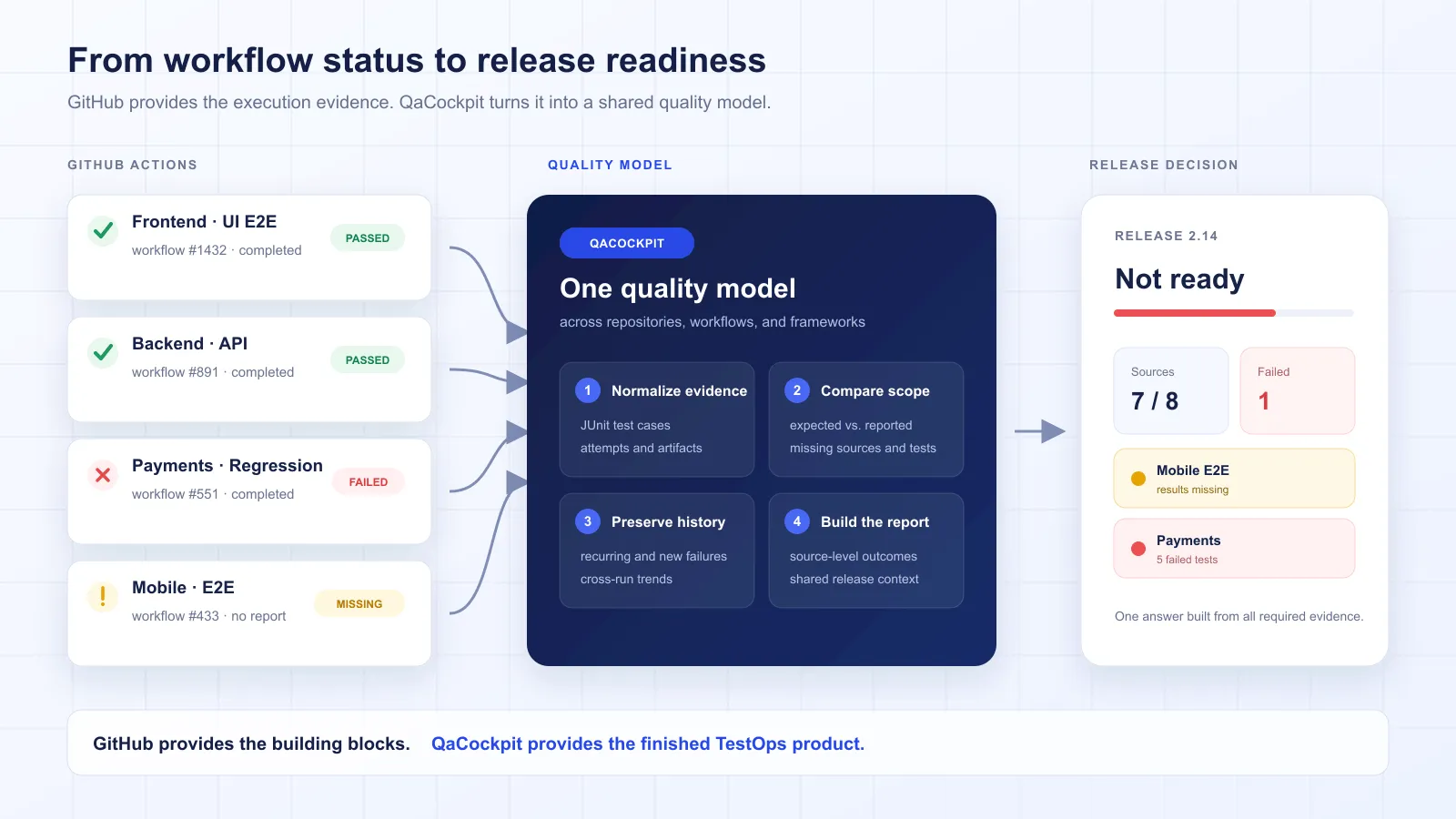
Read articleGitHub Projects and Actions can build powerful release boards. See where a finished TestOps product still saves custom automation and manual coordination.
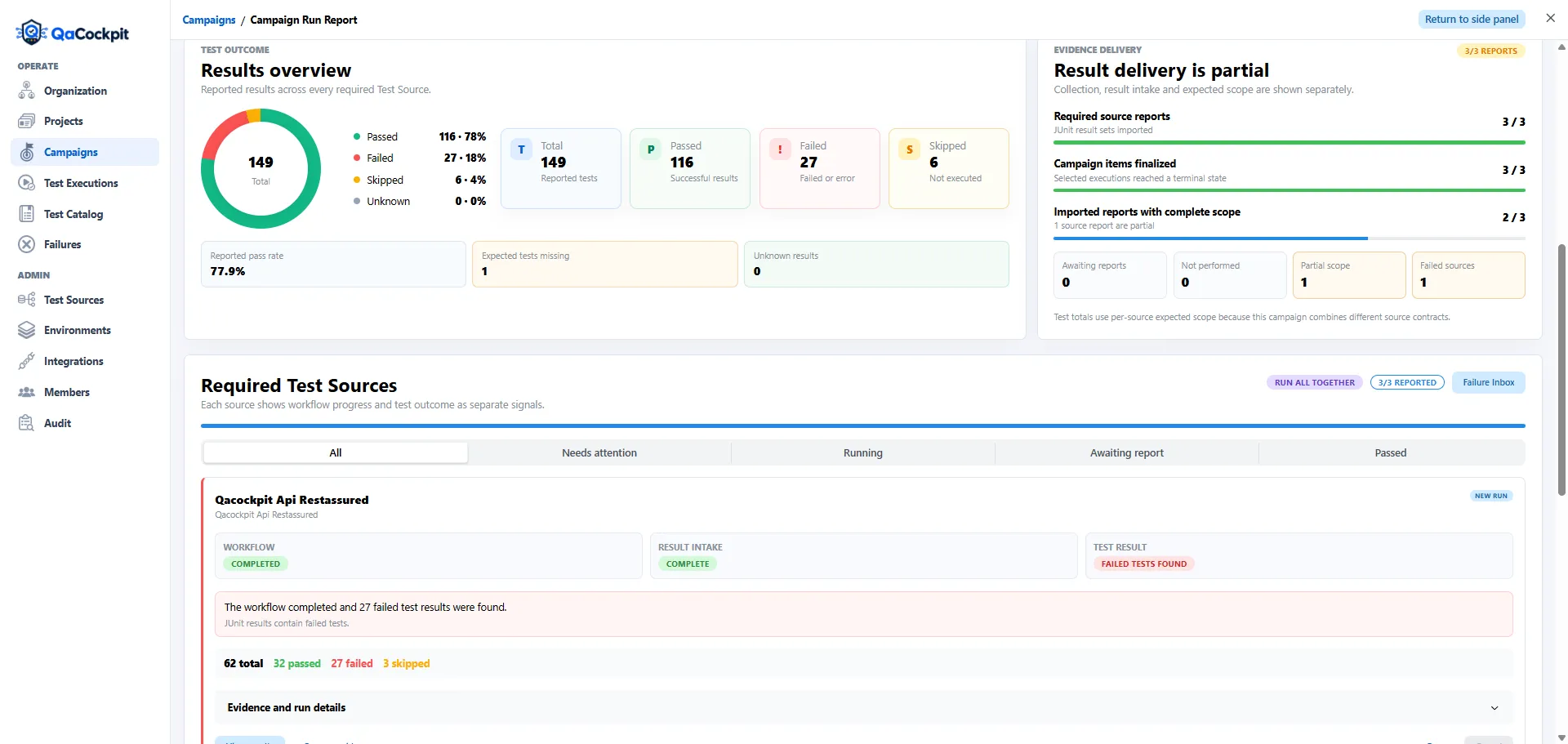
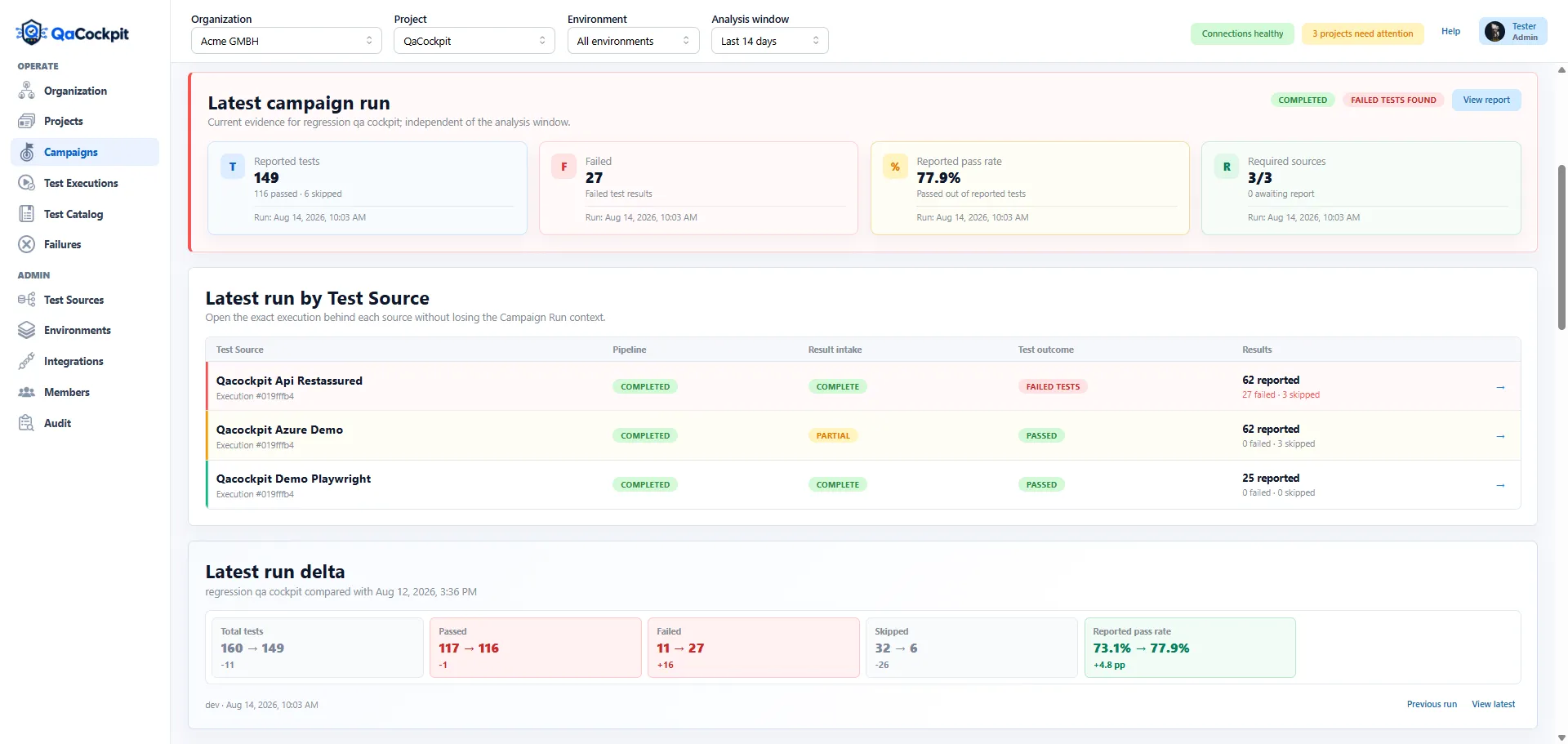
Read articleA regression pass rate can rise while failed tests increase and reported scope shrinks. Learn how to review the full campaign delta instead of one percentage.
Read articleHow better quality understanding supports faster decisions, more focused engineering work, more predictable releases, and stronger customer trust.
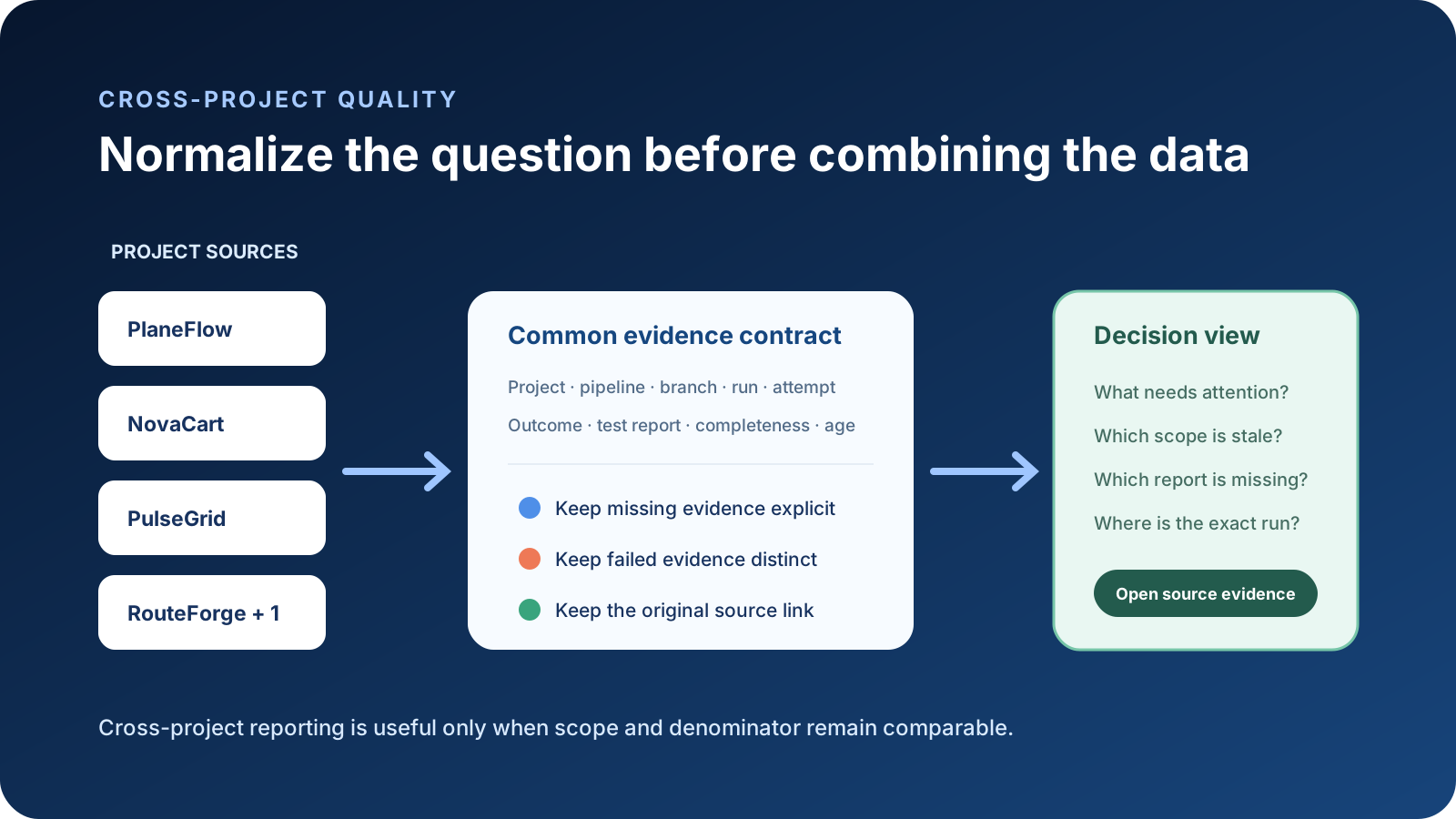
Read articleBuild a cross-project Azure DevOps quality view with native queries, dashboards, Analytics, or Power BI while preserving scope and source evidence.
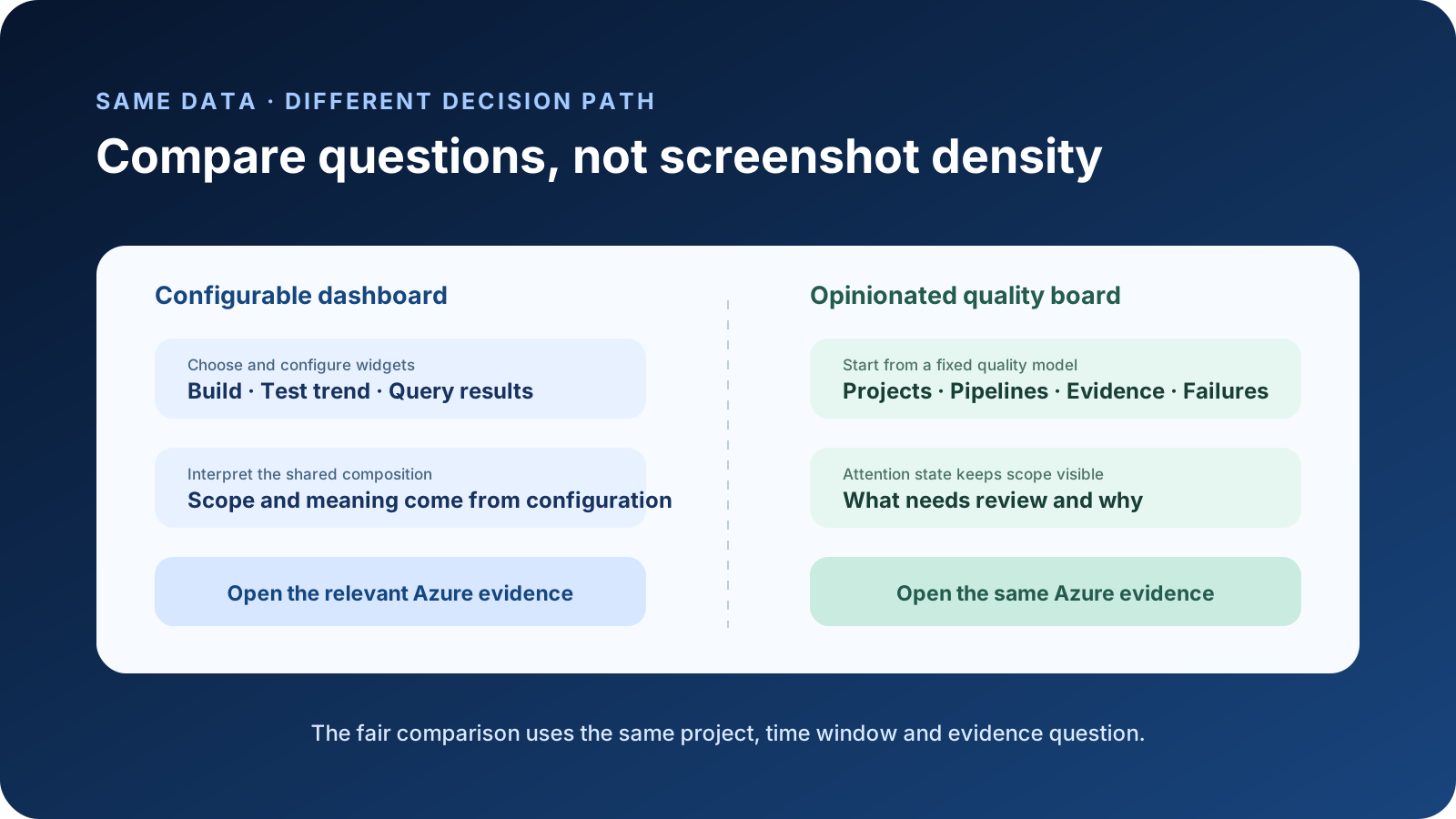
Read articleCompare Azure DevOps dashboards and QaCockpit using the same quality evidence, scope, and first-minute decision instead of counting widgets.
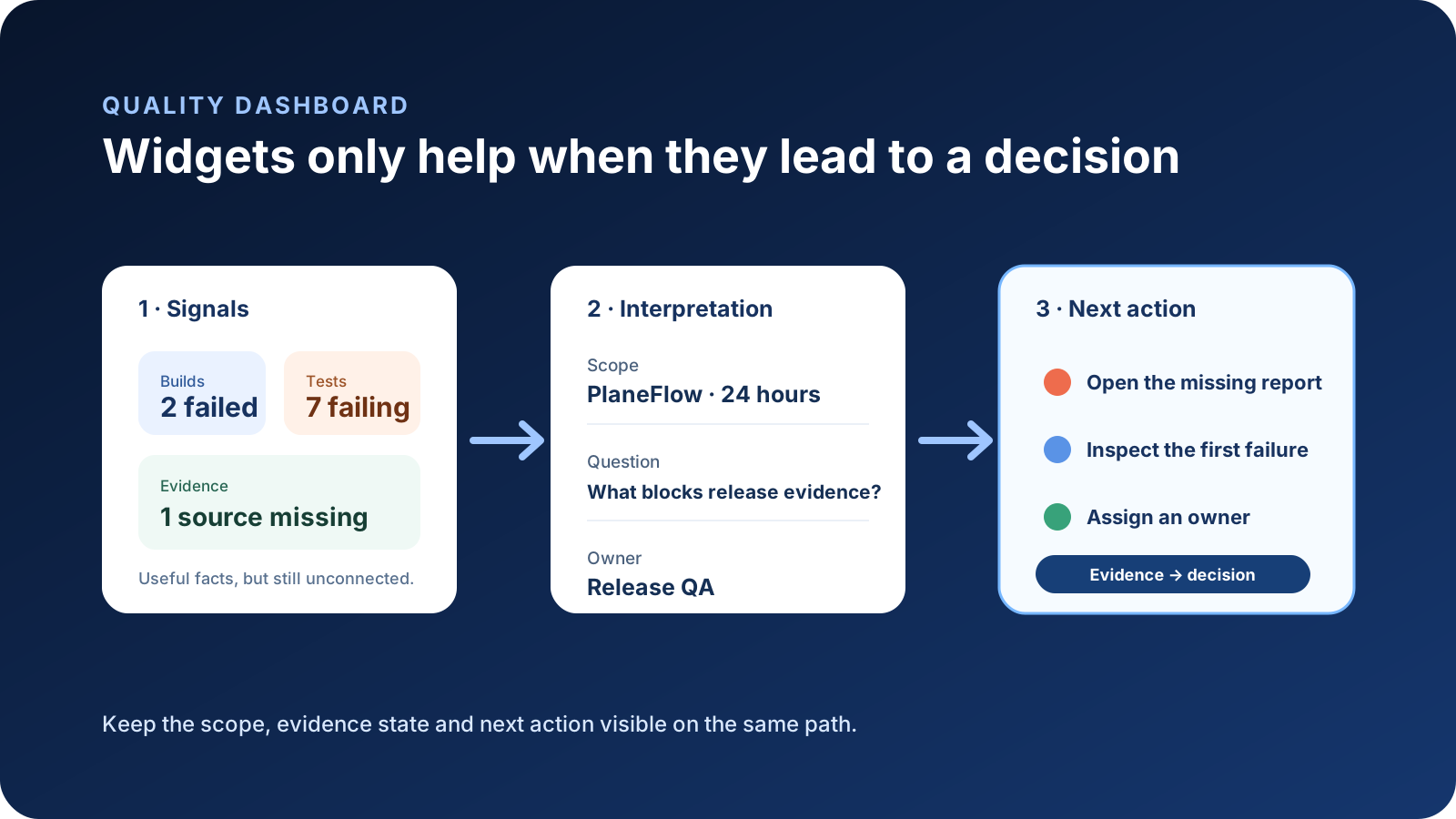
Read articleUse Azure DevOps dashboards well, recognize when configuration loses decision context, and turn widgets into an explicit quality review path.
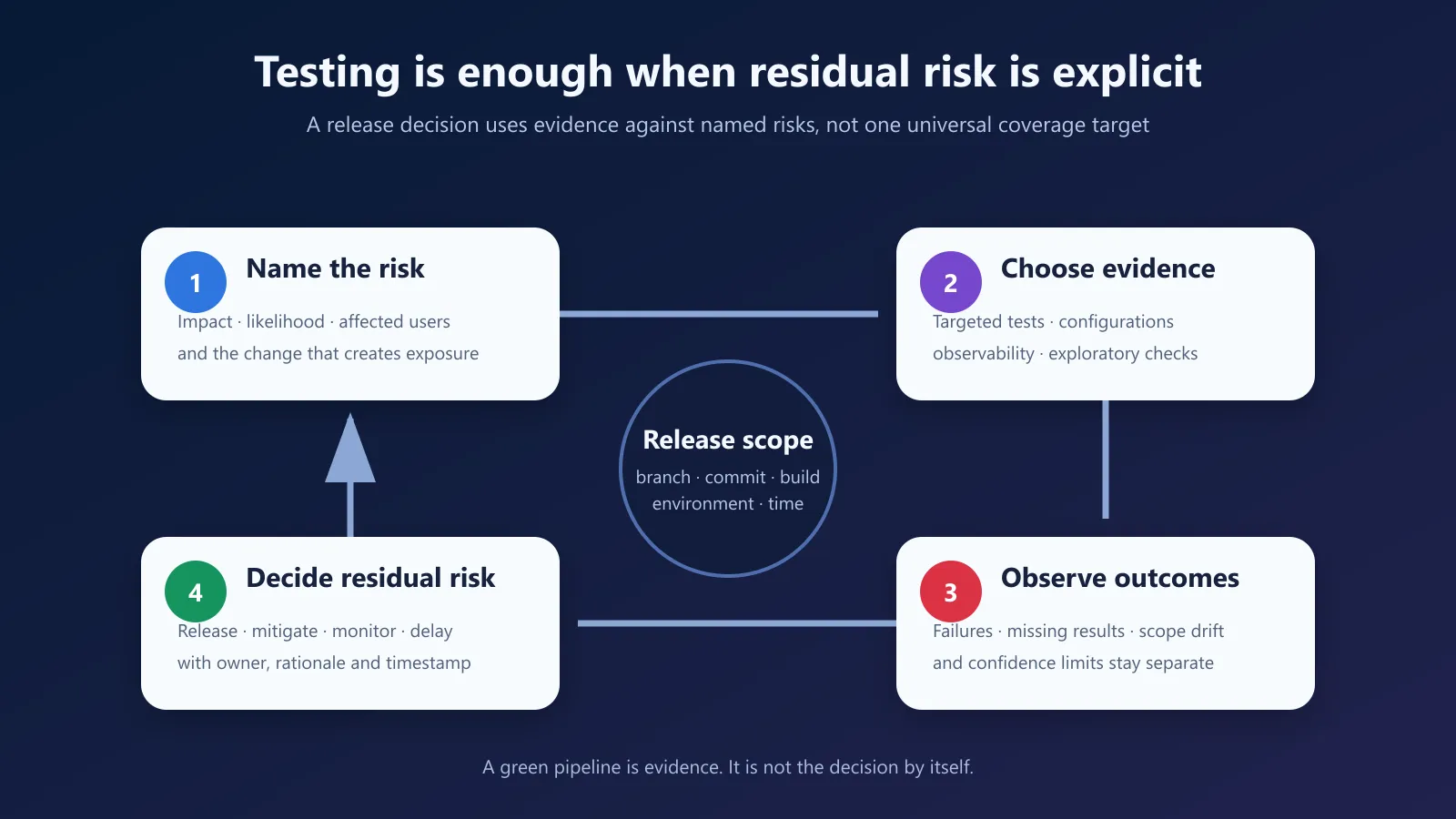
Read articleUse risk-based testing, explicit release scope, and residual risk to decide when testing is sufficient without relying on one coverage target.
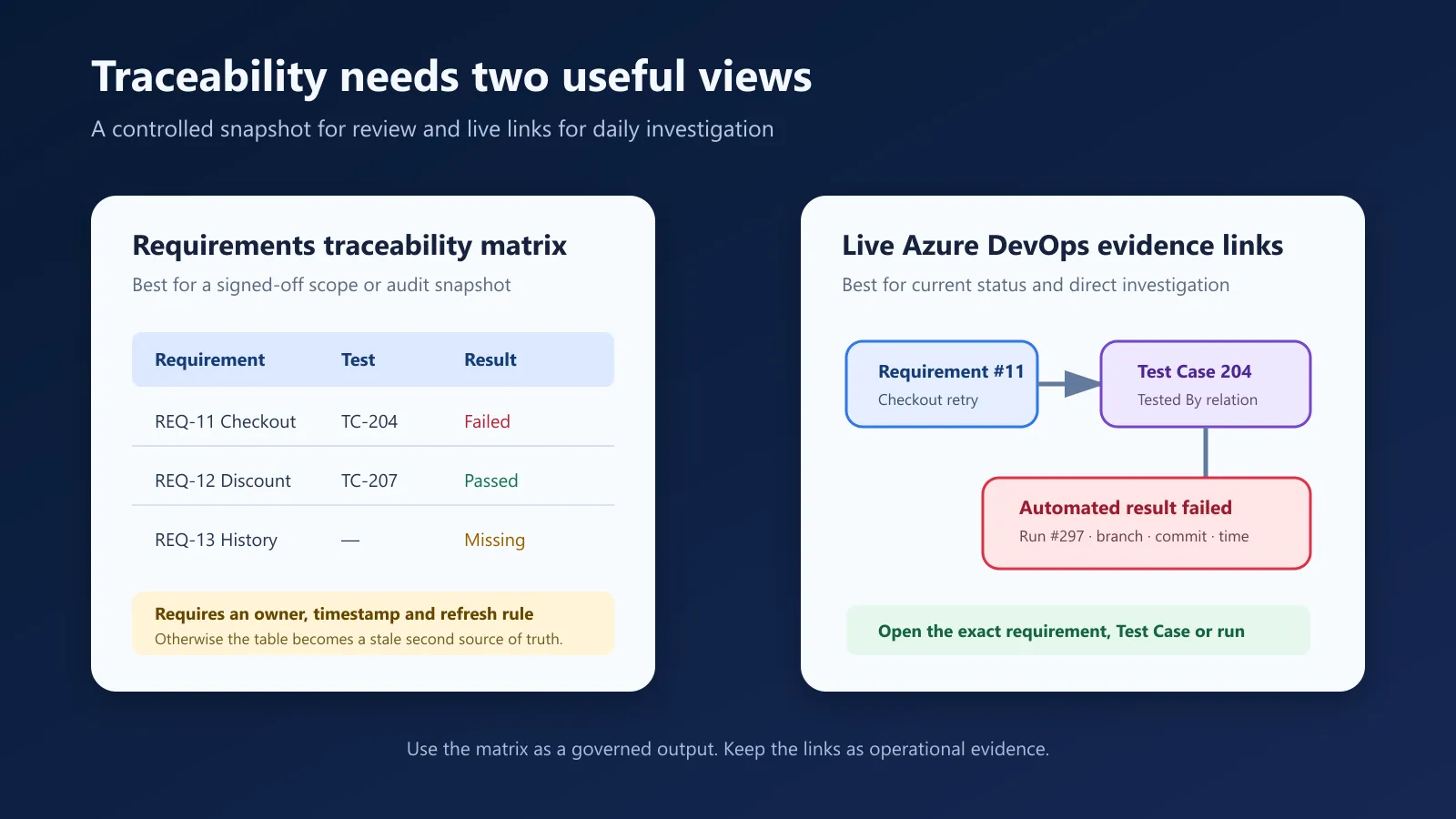
Read articleChoose when a requirements traceability matrix is useful and when live Azure DevOps links provide better evidence for daily delivery decisions.
Read articleTurn imported JUnit evidence into a persistent test catalog with source context, history, ownership, health signals, and linked failures.
Read articleA Failure Inbox turns repeated failed test results into owned investigation work with transparent clustering, classification, context, and evidence.
Read articleA passing report can still be incomplete. Learn how exact test identities and versioned baselines expose added, removed, and repeatedly changed CI scope.
Read articleFragmented automation costs more than reporting time. It creates repeated diagnosis, missing evidence, unclear ownership, and slower quality decisions.
Read articlePass rate describes test outcomes. Time to diagnosis reveals how efficiently a team turns failure evidence into owned, focused quality work.
Read articleWhy we are building a TestOps layer that connects existing automation and turns distributed execution evidence into clearer quality decisions.
Read articleA passed workflow can still hide missing tests, skipped scope, and weak evidence. Learn what a dependable regression signal needs to preserve.
Read articleHow a lightweight campaign model coordinates existing CI/CD workflows while keeping execution, secrets, and test code in customer repositories.
Read articleApply the thinking